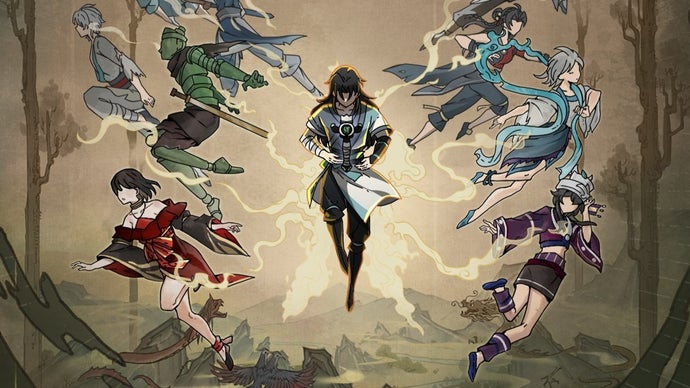
The gaming world has always been a hotbed for creative expression, and nowhere is that creativity more evident than in The Scroll of Taiwu. This title from ConchShip Games has been making waves long before the phenomenon of Genshin Impact or the hype surrounding Black Myth: Wukong. It’s a game that showcases the immense potential of Chinese-developed titles, illustrating a rich tapestry of art and culture that often gets overlooked in the broader gaming landscape.
But a recent decision from the team behind The Scroll of Taiwu has caught the attention of the industry and prompted serious discussions about ethics in game development, particularly regarding generative AI artwork. The team has firmly stated that they will not incorporate generative AI into their artistic process, a choice that stems from a deep respect for the craft and the dreams that drive creators. This resolve encourages a reflection on the heart of artistry, revealing an underlying belief that the development of a game should be a labor of love rather than a mere function of technological capability.
Generative AI has opened up new avenues for creativity, allowing developers to rapidly create visuals and concepts that once required painstaking effort. Yet, this very power raises questions about authenticity and the human touch in creative work. In a medium as expression-driven as video games, where narratives are intricately woven into the gameplay experience, the concern is not just about the output—it’s about the spirit behind it. The Scroll of Taiwu's team knows that each brushstroke, every design element, is imbued with the essence of the creators’ visions, passions, and cultural heritage.
While many argue that generative AI can streamline production and reduce costs, the potential devaluation of true artistry cannot be ignored. It risks turning something profoundly personal into a mere algorithmic output. For ConchShip Games, using generative AI feels akin to betraying the trust between artist and audience. The joy of experiencing a game like The Scroll of Taiwu lies in its authenticity, the distinct signature of human creativity that resonates with players on a deeper level.
This decision reflects a broader sentiment that is gaining traction among developers and players alike. As the industry continues to grapple with the implications of artificial intelligence, The Scroll of Taiwu stands as a beacon for anyone who believes in the sanctity of artistic integrity. It challenges the norm and champions the idea that creativity should come from the heart, not just from a line of code.
Those who follow the gaming scene know this isn't just about one game; it's reflective of a larger conversation about what it means to create. How do we balance technological advancement with the essence of art? It’s a delicate dance, but it’s one that The Scroll of Taiwu navigates with admirable poise. In a world where shortcuts can sometimes overshadow genuine creativity, ConchShip Games opts for a more traditional path, ensuring that the heart and soul of their game are not just preserved but celebrated.
As players, we should stand with developers who prioritize integrity and the unique qualities that make games meaningful. In the growing landscape of video games, The Scroll of Taiwu is a reminder that the magic of gaming is found in the dreams we share and the stories we tell—not in algorithms or automated processes.