V for Vendetta has been a talking point ever since its 2006 film adaptation, yet the conversation surrounding it has become more urgent and poignant with each passing year. The original comic book series, created by Alan Moore and David Lloyd in the 1980s, presented a dystopian vision of a totalitarian Britain. At the time, Moore was critical of Hollywood’s interpretation, voicing concerns that the nuances of his story were lost in translation. However, as we look back two decades after the film’s release, it becomes increasingly clear that the themes it grappled with have not just endured but have become unsettlingly pertinent.
The film’s exploration of authoritarianism, surveillance, and resistance resonated strongly in 2006, but its sentiments have a different weight in today’s political landscape. We grapple with rising extremism and the erosion of civil liberties, not just in the UK but across the globe. The imagery of a masked figure taking a stand against oppressive forces is no longer just a fictional narrative; it mirrors the very real struggles of those challenging authoritarian regimes today.
Interestingly, the layers of V for Vendetta extend beyond the story itself. It challenges viewers to contemplate the nature of power and the responsibility of individuals to confront it. The idea that one person can spark a revolution by standing against tyranny feels both inspiring and daunting. It raises existential questions about the role of citizens when faced with oppressive governance—questions that are as relevant now as ever.
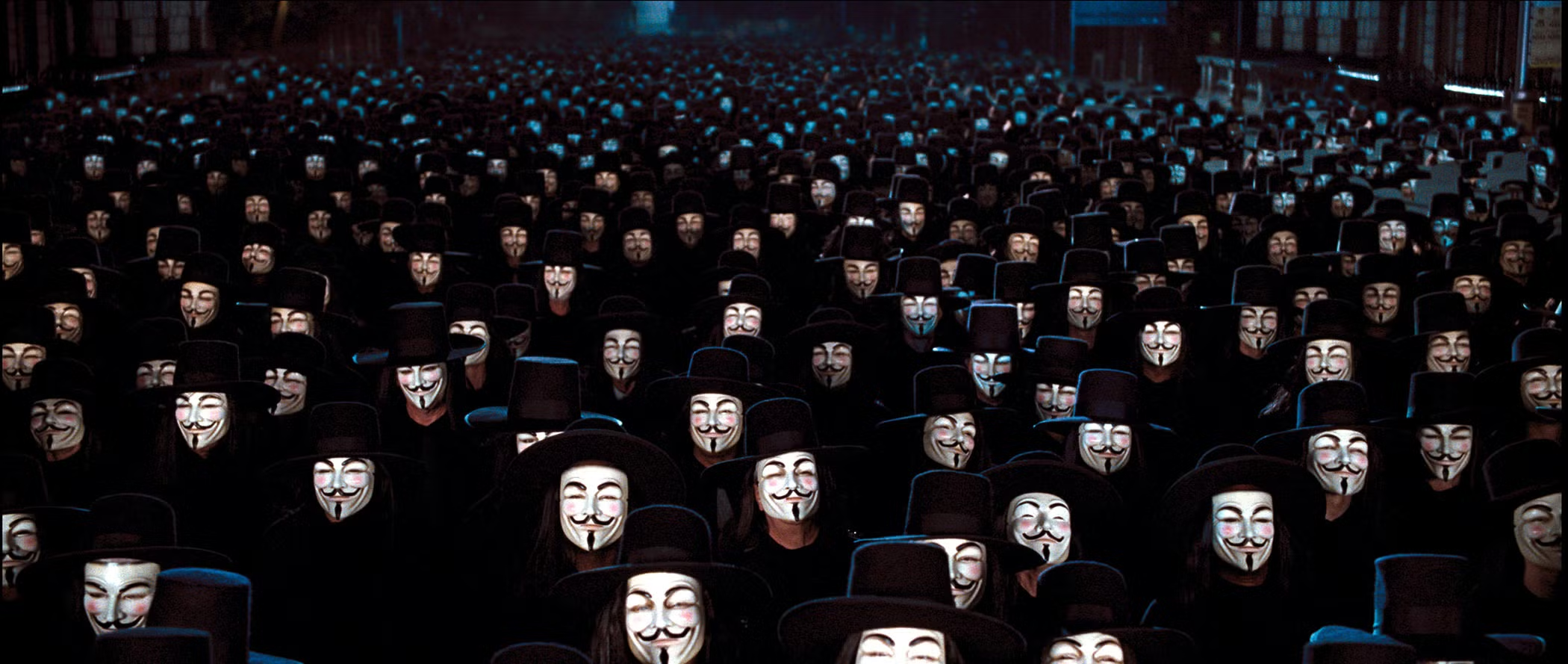
As we navigate a world where misinformation spreads as quickly as ideas, the core message of V for Vendetta comes into sharper focus. The film’s climax, with its iconic Guy Fawkes mask, has morphed into a symbol not just of rebellion but of solidarity in the face of injustice. It’s a cultural artifact that has found new life in memes and protests alike, demonstrating its enduring relevance.
In revisiting V for Vendetta, we recognize not just a reflection of the times in which it was created, but a narrative that invites us to actively participate in our own societal discourse. The uncanny foresight of its creators has made the story feel less like a cautionary tale and more like a rallying cry. As we find ourselves battling the shadows of fascism and questioning the integrity of our institutions, the call to examine our world through the lens of V for Vendetta is as vital as ever.
Source: polygon.com