
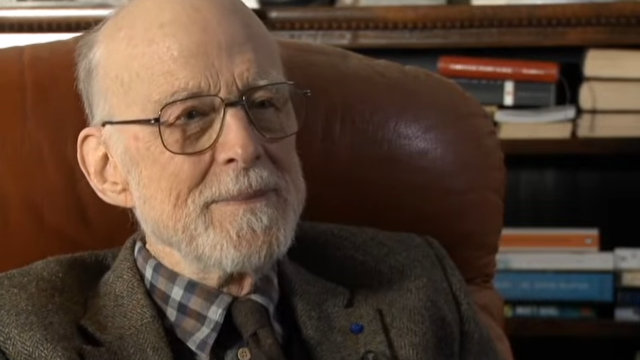
Tony Hoare, a towering figure in the realm of computing, has passed away at the age of 92. His contributions to the field are nothing short of legendary, particularly his invention of the Quicksort algorithm, which he famously devised during a friendly wager for just sixpence. This story speaks volumes about his playful spirit and profound intellect, qualities that have left an indelible mark on computer science.
Quicksort remains one of the most efficient sorting algorithms used today, demonstrating Hoare’s extraordinary ability to innovate. His work has influenced countless developers and shaped the way we approach data sorting and organization. Beyond Quicksort, Hoare’s career is dotted with groundbreaking research in programming languages and software design, earning him the prestigious Turing Award in 1980. The honor symbolizes his significant impact on the development of computer science.
Known not only for his technical prowess but also for his reflective insights, Hoare had a knack for encapsulating complex ideas in simple, often amusing phrases. His remark that one should not trust intelligent programmers reveals a philosophical depth that discerned the vulnerabilities inherent in even the most sophisticated coding practices. It serves as a sobering reminder that behind every line of code, human fallibility lurks.
Hoare’s legacy extends far beyond algorithms. He was also a mentor and educator, inspiring a generation of computer scientists to think critically and creatively. His passion for teaching and sharing knowledge fostered a community that values innovation and inquiry, qualities that will continue to be essential in the rapidly evolving tech landscape.
As we reflect on Hoare’s life and his immense contributions, it is clear that his influence will resonate for many years to come. In an industry that constantly pushes boundaries, his vision and legacy remind us of the power of curiosity and the joy of problem-solving.
Source: pcgamer.com