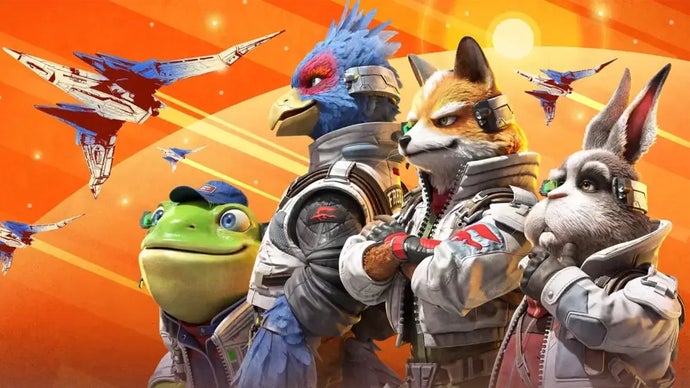
Star Fox has long been a staple in the gaming lexicon, conjuring images of high-speed space battles, charismatic characters, and an unmistakable charm that only Nintendo can deliver. As I wrapped up my latest playthrough, thoughts about the franchise’s evolution, particularly in light of recent gaming trends, began to swirl in my mind.
It’s impossible not to feel a sense of nostalgia when you dive into Star Fox. The franchise has a rich history, stemming from its origins on the Super Nintendo, where it captivated audiences with its groundbreaking graphics and innovative use of 3D polygonal gameplay. Fast forward to today, and it’s hard not to notice that while the essence of Star Fox remains intact, there's an undeniable tinge of caution in Nintendo’s recent approach.
I recently stumbled upon Keza MacDonald's insightful book on the Super Nintendo, which, despite its celebratory tone, casts a shadow of doubt on the path Nintendo seems to be treading. There’s a palpable concern that the company is playing it too safe, and I find myself agreeing wholeheartedly. The vibrant, creative risk-taking that defined an era, particularly under Satoru Iwata's leadership, feels like a distant memory. Instead, we’re treated to a revolving door of familiar franchises and remakes, which, while beloved, often lack that spark of innovation that once set Nintendo apart.
Star Fox has always been about pushing boundaries, both in storytelling and gameplay mechanics. Yet, with each new iteration, there’s a fear that the series may be clinging too tightly to its legacy instead of forging ahead into uncharted territory. This latest installment, while undoubtedly fun and rich in nostalgia, raises questions about the franchise’s future. Are we truly experiencing the creativity that once made Star Fox a powerhouse, or are we simply reminiscing about its glory days?
Nintendo’s recognition of nostalgia is a double-edged sword. Yes, they know how to engage the audience by invoking cherished memories. However, relying too heavily on past successes without the balance of innovation may jeopardize their precious standing in the ever-evolving gaming culture. The recent hardware release, the Switch 2, while an impressive piece of technology, hasn’t exactly screamed forward-thinking. Instead, it feels like just another step in their iterative refinement process, which has led to an increasingly conservative software lineup.
To breathe new life into Star Fox, Nintendo needs to take bold risks and weave potential new narratives in with the established lore. Imagine tearing through the Lylat system with fresh gameplay mechanics or introducing new characters that offer a different viewpoint on familiar conflicts. There’s a world of opportunity lying in wait, and it’s about time Nintendo acknowledged that creativity is not merely a relic of the past but a necessity for the future.
In the end, Star Fox remains a thrilling title full of potential, yet it stands at a crossroads. If Nintendo hopes to keep this beloved franchise relevant, they must be willing to embrace innovation alongside their cherished history. The question looms larger than ever: will they rise to the occasion, or will we continue to surf on the waves of nostalgia while yearning for something new? The answer is crucial, not just for Star Fox, but for Nintendo’s legacy as a whole.