
Christopher Nolan’s exploration of time has been a recurring theme throughout his career, and it’s fascinating to trace its roots back to his breakthrough film, Memento. Released 25 years ago, this psychological thriller revealed not just a masterful narrative structure but also set the stage for many of Nolan’s subsequent works, such as Oppenheimer, Tenet, and Inception.
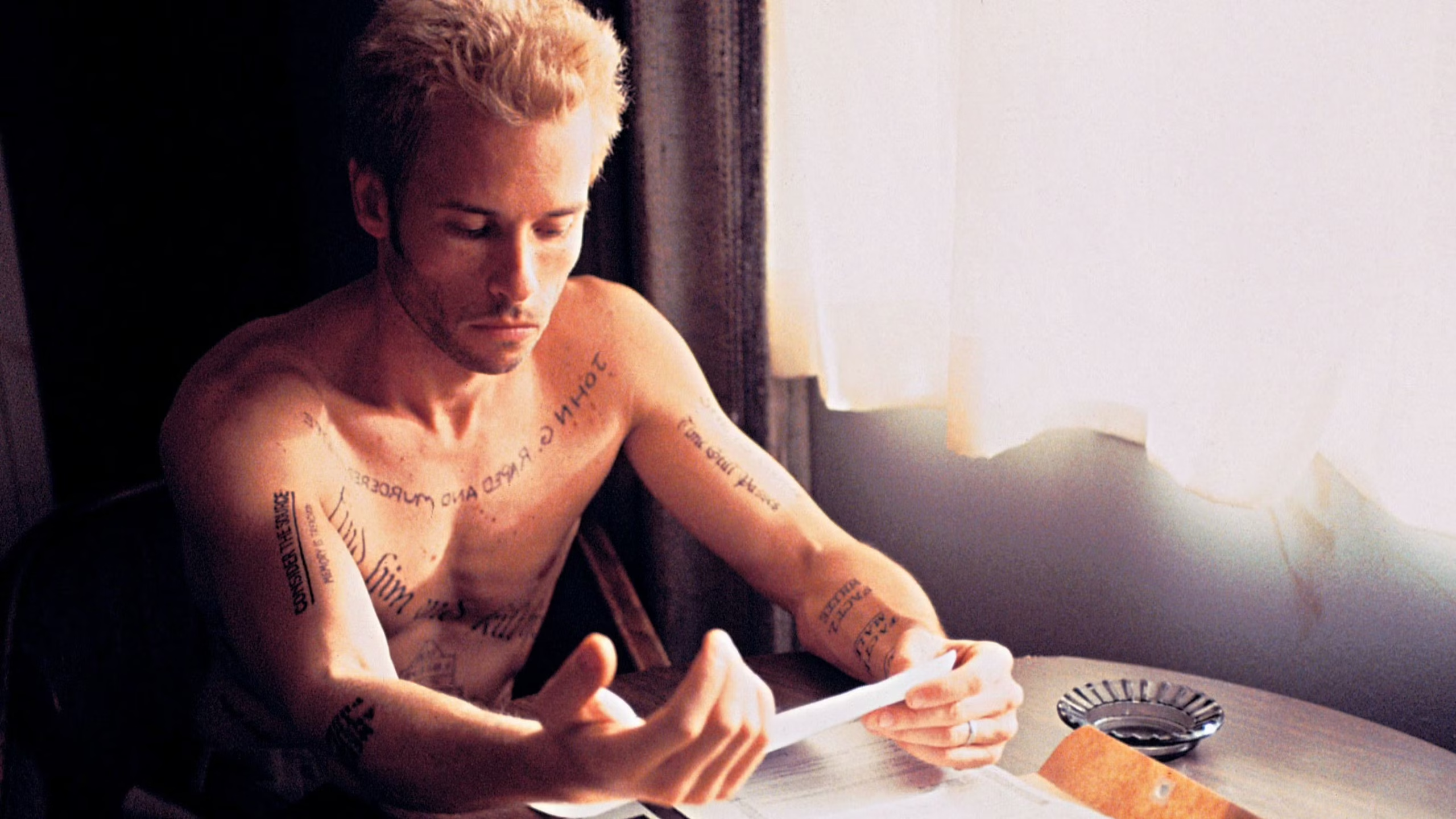
At its core, Memento plays with the concept of memory and perception, pulling viewers into the disjointed experience of protagonist Leonard Shelby, who struggles with short-term memory loss. The film’s unique storytelling technique, which unfolds in reverse chronological order, challenged audiences and kept them guessing. This intricate approach isn’t merely a stylistic choice; it creates an immersive experience, forcing viewers to grapple with the same confusion that Leonard faces.
Nolan’s penchant for non-linear narratives blossomed here, laying groundwork for the complex timelines that would feature prominently in Inception and Tenet. In these films, the manipulation of time becomes a character in itself, influencing both plot and emotional experience. Oppenheimer, while focusing on a historical subject, still weaves in that same tension surrounding time and consequence, echoing the themes Nolan first introduced in Memento.
The interplay of memory and time in Memento invites a deeper conversation about the reliability of our perceptions. Every twist and turn reflects Nolan’s ongoing fascination with how our understanding of reality can be shaped and distorted. Just as Leonard creates a narrative from fragmented memories, Nolan orchestrates intricate plots that require viewers to assemble the pieces for themselves.
Memento is not just a film; it is a key to understanding the complexities of Nolan’s cinematic universe. It reminds us of how time, memory, and choice can converge, leaving a profound impact that resonates through his entire body of work. As we revisit Memento, it’s clear that this film is more than a time capsule of an emerging talent. It’s the genesis of a filmmaker’s enduring obsession with the nature of time, profoundly shaping his narrative style and thematic focus.
Source: polygon.com