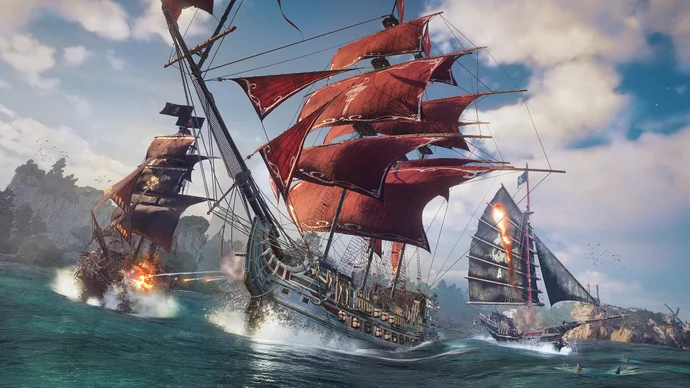
Ubisoft has been making headlines lately, not just for its ambitious plans around franchises like Assassin’s Creed and Far Cry, but also for the whirlwind of layoffs, studio closures, and project cancellations that have cast a shadow over the company. Yet, even in the midst of this turmoil, Skull and Bones persists, continuing to navigate its way through the turbulent waters of game development. Despite the challenging launch that left many underwhelmed, the game remains operational, a testament to the stubbornness of its creators.
The struggles of Skull and Bones have not gone unnoticed, and Alex Hutchinson, who directed Assassin’s Creed 3, recently offered insights into what went wrong with this much-anticipated title. Hutchinson noted that in the fast-paced world of game development, ideas can quickly become stale, losing their relevance and excitement if not brought to fruition in a timely manner. His perspective highlights an often-overlooked aspect of the creative process: viable concepts have a shelf life.
The challenges faced by Skull and Bones can be attributed to several factors. Initially conceived with high hopes, the game’s vision may have seen shifts that contributed to its rocky reception. As development dragged on, the gaming landscape evolved, and what once felt innovative can begin to seem dated. Hutchinson’s experience illustrates how vital it is to strike while the iron is hot, to capitalize on the zeitgeist before the window closes.
As the dust settles on the game’s tumultuous development path, one can’t help but wonder if Ubisoft has learned from this experience. With various projects on the table, the company seems focused on maintaining its footing with its flagship franchises, but the lessons of Skull and Bones serve as a reminder of the delicate balance between ambition and execution in the ever-evolving gaming industry.
Source: eurogamer.net