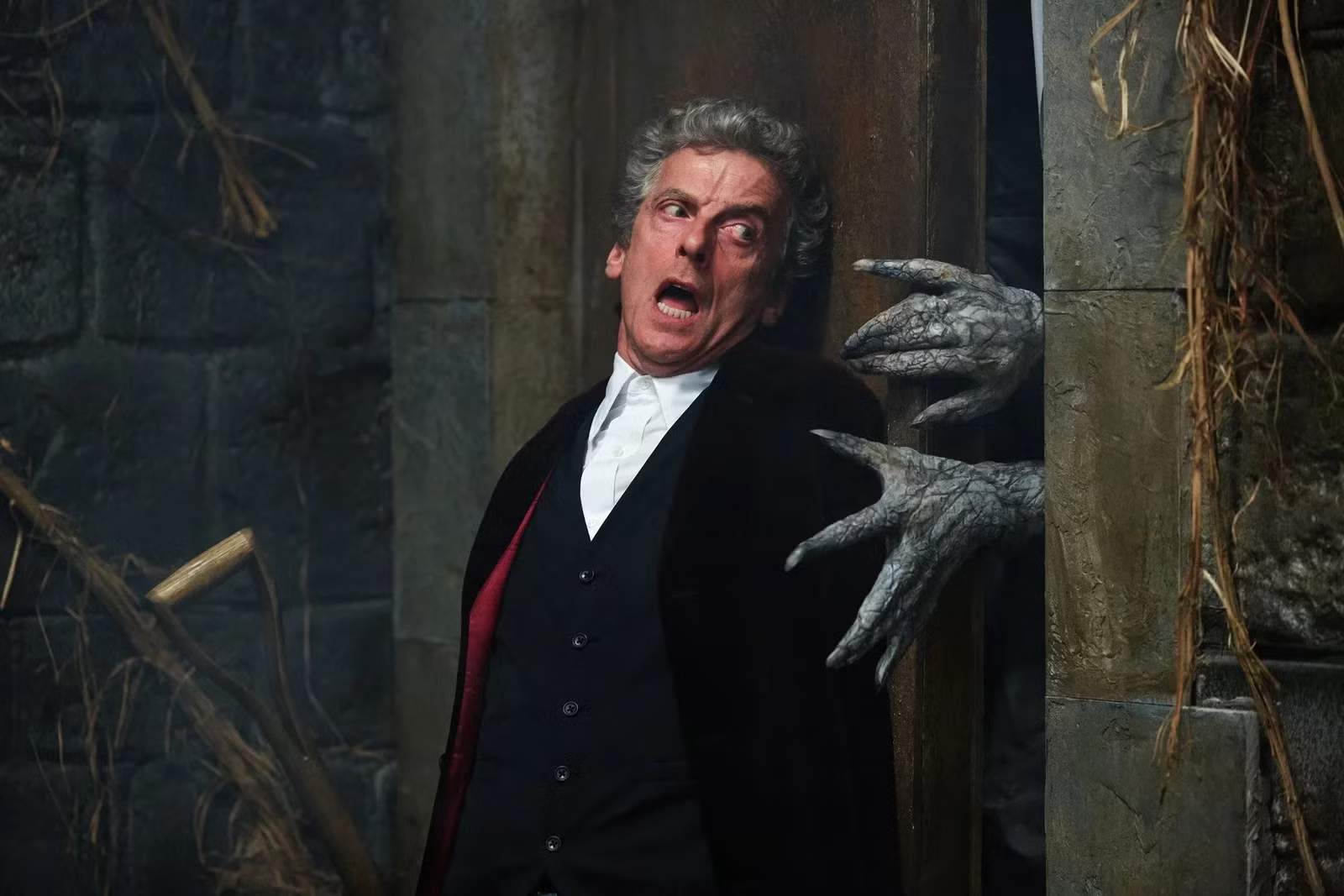
In a recent Dungeons & Dragons campaign, I took the rich, atmospheric setting of the Death House from Curse of Strahd and infused it with a fresh twist inspired by Doctor Who’s compelling “Heaven Sent” episode. The idea was simple yet exciting: transform the harrowing gothic horror of Death House into a roguelike dungeon centered around time loops.
For those familiar with Curse of Strahd, Death House serves as a grisly introduction to Barovia, filled with eerie secrets and unsettling encounters. It’s a place where dread hangs thick in the air, and any misstep can lead to dire consequences. But I wanted to explore the mechanics of time and mortality, creating a space where players would not only have to navigate the horrors within but also grapple with an unsettling repetition.
The key was to implement a time loop that would reset certain elements each time the players experienced defeat. If they fell to the horrors lurking in the shadows, they would awaken at the beginning of the house—memories perhaps still fresh, but their experiences would alter the coming challenges. I drew from the essence of Doctor Who, where the passage of time is both a friend and foe, allowing for clever narrative twists and character development that happens under the strain of continual peril.
As they traversed the darkened hallways filled with dreadful specters and eerie puzzles, players would uncover different pieces of lore with every loop. Some aspects would remain the same, drawing upon the dread that permeates the house, while others morphed or evolved, challenging players to adapt their strategies. The strategy was to keep the players on their toes while deepening the psychological tension.
Throughout the campaign, this transformation created a unique environment where every decision carried weight, and every failure revealed new insights. Although the gothic elements of Death House remained intact, weaving in the fabric of a time loop enriched the storytelling, offering moments of both reflection and terror.
This blend of classic horror and sci-fi narrative devices was not just a playful homage to a beloved television show; it became a core part of our gaming experience. Players embraced the cyclical chaos, finding new ways to confront the nightmarish foes, and forming stronger bonds as they faced repeated trials together. In the end, this daring combination not only revitalized familiar territory but also served as a poignant exploration of how we confront our fears in the face of certain doom—a theme echoed beautifully across genres and narratives.
Source: polygon.com