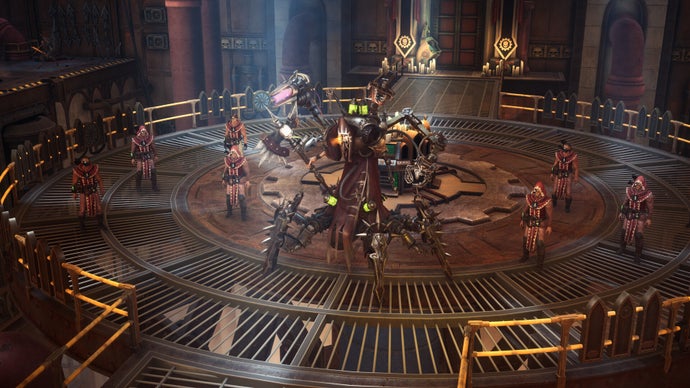
In the chaotic world of video games, few franchises generate as much passion and fervor as Warhammer 40,000. It’s a universe steeped in lore, epic battles, and a fanbase that knows just what it wants. So when Owlcat Games decided to roll out a new launcher for Warhammer 40,000: Rogue Trader, expectations ran high—until they didn't.
A mere day after introducing this shiny new launcher, the fervor of players resulted in a swift retreat. It’s not uncommon for developers to experiment with new platforms, but the fierce backlash from the community sent a loud message: gamers are tired of yet another launcher cluttering their already packed desktops. The new launcher was meant to improve functionality and user experience, but the reality was far less welcome.
What started as a potential enhancement quickly devolved into a round of stark criticism. Players took to social media, forums, and any available outlet to express their frustration. The gaming community has undergone this dance numerous times before—new launchers coming and going like seasonal trends—but that doesn't make the hurt feelings or the eye-rolls any easier to suppress. The primary concern was straightforward. Gamers don’t want the hassle of juggling one more piece of software, especially not for a title that already has a loyal following and a dedicated player base.
For many, the essence of gaming lies in its accessibility. The last thing anyone wants is to be greeted by a new set of hurdles before diving into a game they genuinely enjoy. This sentiment echoed loud and clear among Rogue Trader devotees who felt that their experience was being unnecessarily complicated. Instead of bolstering their excitement for an awaited title, this launcher became a point of contention and a roadblock to their gaming experience.
The speed of this backlash underscores an important lesson for developers: the gaming community is vocal, passionate, and not afraid to voice displeasure. It also illustrates the precarious balance that developers must maintain when making decisions that could affect user experience. Often, an attempt to streamline or improve accessibility ends up causing confusion or frustration. While it’s easy to envision a future where all games are effortlessly consolidated into a singular platform, the reality is that players often prefer simplicity over added complexity.
Ultimately, it seems that Owlcat Games has decided to heed this feedback—at least for now. The new launcher has been pulled, serving as a stark reminder that innovation in gaming can't come at the cost of the player experience. It’s a delicate dance, where listening to the audience is as crucial as the development of the game itself. For now, those involved in Warhammer 40,000: Rogue Trader can breathe a sigh of relief, knowing they can continue to engage with the game they love without the distraction of an unwanted launcher.
As we look toward the future, it’s clear that developers must remain attuned to their communities. While the gaming landscape continues to evolve, so too must the ways in which we interact with it. One misstep can quickly turn anticipation into uproar, and sometimes it's best to let the players decide what they truly want. As the sun sets on this brief spectacle, one can only wonder what the next chapter holds for Rogue Trader and its dedicated legion of fans.