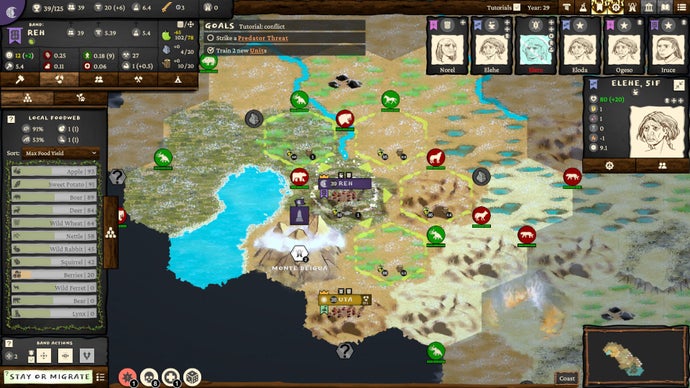
Folk Emerging is a refreshing take on the 4X strategy genre, taking players deep into the heart of civilization-building with a focus that many games overlook: the initial moments of establishing a society. Set against the backdrop of a changing world where the permafrost recedes in the fictional landscape of Edwinland, players step into the sandals of Norel, shaman of the Moon tribe. It’s not just a game; it’s a miniature expedition into the complexities of leadership, community, and survival.
At its core, Folk Emerging encapsulates that thrilling moment when your tribe stands on the brink of growth and conflict. As I guided Norel through the treacherous waters of community dynamics, I could almost feel the collective anxiety of my people as they faced challenges that felt strikingly relevant. There’s something palpable about trying to balance a harmonious existence while addressing the needs and desires of a population that seems to grow sharper and more demanding with each turn. With our numbers swelling past 40, the campfires buzzed with too many voices, each one crying out for attention, food, or adventure.
This game effortlessly brings to life the struggle of resource management, particularly when the local boar herds begin to dwindle. It reminds us that every decision carries weight and responsibility. Do I prioritize exploration to find new hunting grounds, or do I focus on stabilizing the existing resources? The tension is deliciously palpable, as every choice ripples through the community, manifesting in spirited debates around the fire. And, in our digital age, this would be the kind of dilemma that resonates with anyone who's ever had to make a tough call in their own lives, be it at work or at home.
The visuals blend sleek aesthetics with functionality, reflecting the essence of a world on the brink of change. Nature plays a significant role, not just as a backdrop but as a living entity that responds to your actions. The climate is not just a setting but an evolving challenge that shapes your every decision. Watching the permafrost melt and the fjords change is a constant reminder of the transient nature of resources and community survival.
What stands out about Folk Emerging is its ability to encapsulate the initial excitement and trepidation of building a civilization. The intricacies do not overwhelm; instead, they invite players into deeper engagement with their tribe. The game’s pacing allows for thoughtful decision-making, creating a balance between strategy and human emotion.
Looking ahead, the potential for expansion is notable. There's room for deeper mechanics like diplomacy with neighboring tribes or environmental challenges that could escalate as the game progresses. But even in its current form, Folk Emerging offers an intimate yet expansive experience that I find incredibly promising. Engaging with the Moon tribe isn’t just about winning—it’s about understanding and fostering a community amid the throes of development.
In a gaming landscape often seen as bloated with content, Folk Emerging feels like a breath of fresh air. It’s a reminder of what makes strategy games compelling: the stories we build, the conflicts we navigate, and the triumphs we achieve alongside our virtual communities. This small-scale approach might just be the next big leap in how we think about strategy simulations.