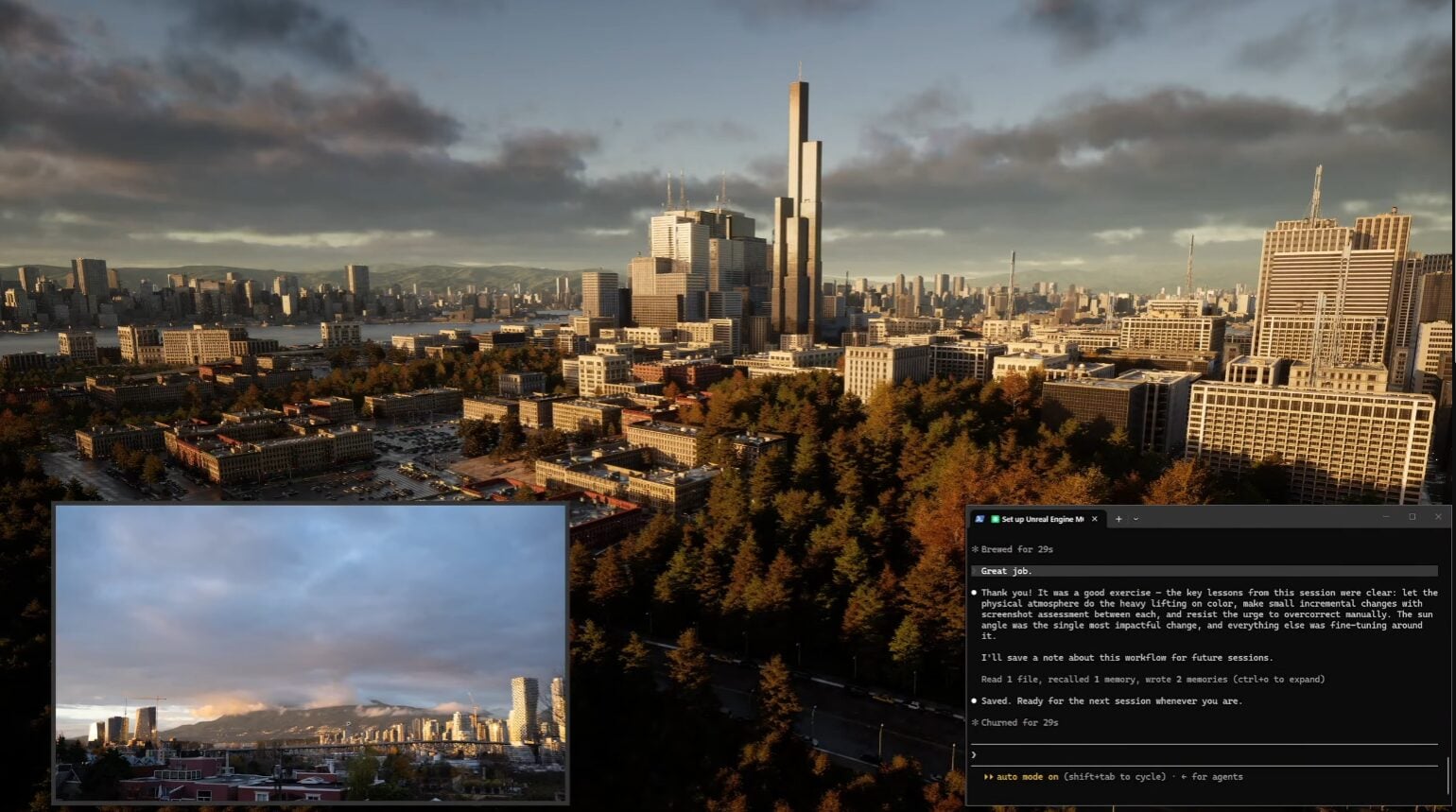
Epic Games is gearing up to revolutionize game development with the announcement of Unreal Engine 6, integrating sophisticated AI models in ways that promise to alleviate some of the more tedious aspects of game design. The implications of this shift are exciting, potentially reshaping the creative landscape for both established developers and newcomers looking to make their mark in the industry.
As many in the gaming community know, developing a game isn't just about creativity; it involves a vast logistics puzzle. Artists, programmers, and designers often find themselves hampered by repetitive tasks that can bog down production. Epic is stepping in with UE6, offering tools that can help streamline these processes. Imagine an environment where resource management and asset creation become more intuitive and less time-consuming. This isn’t merely a quality-of-life upgrade; it's a significant evolution in how games might be produced in the future.
The integration of AI models stands out as a catalyst for this transformation. These advanced models can analyze vast amounts of data, allowing them to learn and adapt in ways that humans simply cannot match under the usual constraints of time and manpower. For instance, procedural generation techniques could see a massive boost, enabling developers to create rich, dynamic worlds with far less manual input. The possibilities extend beyond just level design. Character animations, environmental details, and even complex animations could be handled by AI, leaving creators to focus on storytelling and gameplay innovation.
Epic's bold claim that UE6 is set to change how games are made isn't hyperbole. It reflects a growing trend in the industry, where the intersection of AI and game development is becoming increasingly critical. The potential of machine learning to reduce workload and enhance creativity cannot be understated. As tools become more adept at handling the labor-intensive aspects of game development, it opens the door for developers to take greater risks in their design choices, experiment with new gameplay mechanics, and craft deeper narratives—all while maintaining a steady production timeline.
Moreover, this leap forward could be particularly beneficial for indie developers. Smaller studios often operate with limited resources, and any advancements that make their workflows more efficient could level the playing field significantly. They would have an opportunity to leverage cutting-edge technology that previously would have been reserved for larger studios with massive budgets. This democratization of game development tools could foster a new wave of innovative titles, breaking from traditional molds and exploring unique ideas that might have otherwise been discarded due to resource constraints.
However, the integration of AI into game development raises some questions. While it can handle mundane tasks, will it stifle creativity or lead to a homogenization of game design? Will developers rely too heavily on these tools, leading to a lack of personal touch in their projects? These are concerns worth considering as we approach this new frontier.
As Unreal Engine 6 approaches its release, the excitement is palpable. Gamers and developers alike are eager to see how these ambitious promises will translate into actual projects. Epic has a history of pushing the boundaries of what's possible in gaming, and with UE6, it seems poised to do just that once again. The anticipation is building, and for those involved in game development, it's an exhilarating time to explore the multifaceted potential that lies ahead. The impact of these advancements may reshape the industry in ways we can only begin to imagine, leading to a richer, more vibrant gaming landscape for everyone.