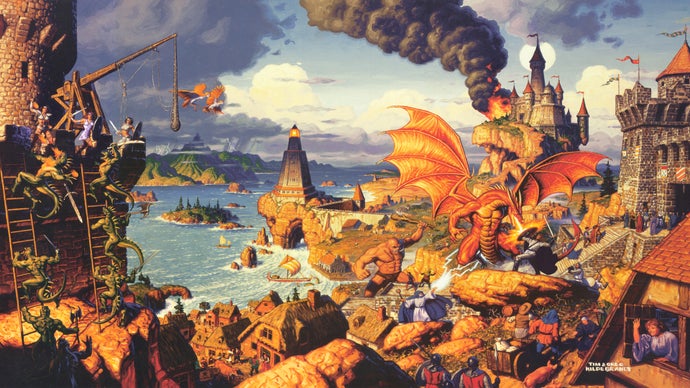
In the ever-evolving landscape of video game franchises, few names resonate quite like Ultima. This iconic series, which helped shape RPGs as we know them today, has been on an unexpected hiatus. The last title to bear the Ultima name was Underworld Ascendant, released nearly eight years ago, and even that felt more like a distant cousin than a true heir to the legacy. For fans of the series, it’s been a long wait, peppered with fond memories and a touch of hope for a revival.
Recently, EA stirred the pot by filing new trademarks for the Ultima series, a move that has sparked both curiosity and speculation across the gaming community. This is a significant gesture, signifying that the company still sees value in a franchise that has been dormant for far too long. However, what makes this development particularly intriguing is the counter-narrative involving Richard Garriott, the mastermind who originally birthed the series and famously goes by the moniker “Lord British.” His quest to reclaim the copyright could set off a fascinating chapter in Ultima's storied history.
To understand the gravity of this situation, one must appreciate the enduring legacy of Ultima. Launched in 1980, the series has long been celebrated for its complex storytelling, pioneering gameplay mechanics, and incredible world-building. Yet, like many beloved franchises that have crossed the four-decade mark, Ultima has slowly lost traction over the years. While some may argue that nostalgia alone can't bring it back, Garriott’s potential return offers a glimmer of hope for a new direction that resonates with both old fans and a new generation of players.
As EA looks to stake its claim with these renewed trademarks, it seems to underscore a sense of readiness to rethink how Ultima could fit into today’s gaming ecosystem. In a business climate where remakes and reboots dominate, it’s possible we could see a resurgence that honors the series' roots while appealing to contemporary tastes. However, it remains to be seen how Garriott’s pursuit of the copyright will factor into this scenario.
Garriott has made it clear he has not given up on Ultima, and his desire to reclaim his creation puts him in a unique position. The clash of these two forces, one representing the corporate side of gaming and the other a visionary creator, could create a dynamic that affects the future of the franchise. If Garriott secures the rights, we could witness a truly authentic revival that returns to the philosophical underpinnings that made Ultima a classic.
But if EA maintains control, what might a new Ultima look like? Could we finally see the series embrace modern technology while staying true to the narrative depth and moral complexity that characterized its predecessors? There’s a tantalizing possibility here for innovation that aligns with the themes of choice and consequence.
Ultimately, this unfolding drama has the potential to breathe new life into a franchise that deserves a proper second act. Whether it’s Garriott at the helm or EA’s trademarks paving the way for a fresher take, the gaming world will be watching closely. Fans can only hope that whatever comes next carries the spirit of Ultima into a new age; after all, the heart of the series lies in exploration and imagination, and those tenets are timeless. The wait may have been long, but this could be just the prologue to an exciting revival.